Denon vs Onkyo: Receivers Compared by Specs
As an Amazon Associate we earn from qualifying purchases. Links on this page are affiliate links.
When you compare a denon vs onkyo receiver, you are looking at two distinct approaches to home theater. Both brands offer black units with HDMI inputs and Bluetooth support. The main difference lies in channel count and video processing. Denon focuses on 8K clarity with five channels. Onkyo prioritizes immersive sound with nine channels and THX certification. This guide breaks down the specs to help you decide.
Key differences
| Aspect | Denon 5.2-Channel 8K Ultra HD AV Receiver | Onkyo 9.2-Channel THX Certified AV Receiver |
|---|---|---|
| Channels | 5.2 | 9.2 |
| Video Resolution | 8K Ultra HD | 4K Ultra HD |
| Height | 9 inches | 6.8 inches |
| Weight | 20.2 pounds | 27.5 pounds |
| Certification | not listed | THX Certified |
Which one should you choose?
Choose Denon 5.2-Channel 8K Ultra HD AV Receiver if
- You want the highest video resolution available at 8K Ultra HD.
- You prefer a lighter unit that is easier to place on a shelf.
- You need a receiver for a standard 5.2 speaker setup.
Choose Onkyo 9.2-Channel THX Certified AV Receiver if
- You want to power more speakers with a 9.2 channel architecture.
- You require THX certification for cinema-accurate sound modes.
- You need built-in AirPlay 2 for streaming from Apple devices.
Verdict: The Denon model suits you if 8K video support and a compact, lighter chassis are your top priorities. The Onkyo unit is better for audiophiles who need nine channels and THX certified processing for immersive surround sound. Choose based on whether you value video fidelity or channel count.
Denon vs Onkyo Receiver Specs
Channel Configuration
The Denon AVR-S570BT offers a 5.2-channel setup, suitable for standard surround sound. The Onkyo TX-NR7100 provides a significantly more powerful 9.2-channel architecture. This higher channel count allows the Onkyo unit to support advanced object-based audio formats and more complex speaker arrangements. You get more amplification channels with the Onkyo model, making it better for larger rooms or future upgrades. The Denon is sufficient for basic setups but lacks the extra channels for immersive height or rear surround effects.
Video Resolution
Video processing capabilities differ between these two receivers. The Denon AVR-S570BT supports both 8K Ultra HD and 4K Ultra HD video output. This future-proofs your setup for next-generation displays. The Onkyo TX-NR7100 handles 4K Ultra HD video but does not list 8K support in its specifications. If you have an 8K TV or plan to upgrade soon, the Denon provides higher resolution passing. For current 4K content, both units deliver clear images, but the Denon leads in maximum resolution capability.
Audio Certification
The Onkyo TX-NR7100 is THX Certified, which ensures it meets strict performance standards for cinema-quality audio. It includes four distinct THX listening modes: cinema, gaming, music, and surround EX. This certification provides a calibrated reference for accurate sound reproduction. The Denon AVR-S570BT does not mention THX certification in its data. While it supports complete 3D surround sound, the lack of official THX validation means it may not offer the same standardized accuracy for critical listening or home theater immersion as the Onkyo model.
Wireless Connectivity
Both receivers include Bluetooth for wireless audio streaming. The Onkyo TX-NR7100 goes further with bi-directional Bluetooth technology, allowing you to stream from devices or transmit audio to wireless headphones. It also supports AirPlay 2 for seamless integration with Apple devices. The Denon AVR-S570BT lists standard Bluetooth connectivity. The Onkyo offers more versatile wireless options, including AirPlay 2 and headphone transmission, giving you more ways to stream music without cables compared to the Denon.
Physical Dimensions
Size matters for placement in your entertainment center. The Denon AVR-S570BT is wider at 17.1 inches but taller at 9 inches. The Onkyo TX-NR7100 shares the same 17.1-inch width but is shorter at 6.8 inches and shallower at 14.9 inches. The Onkyo has a more compact footprint vertically, which may fit better in tighter spaces. The Denon is heavier at 20.2 pounds compared to the Onkyo’s 27.5 pounds. Both are black, but the Onkyo’s lower height might be easier to conceal in some setups.
Choose your receiver by needs
You want the latest video tech
The Denon AVR-S570BT supports 8K Ultra HD video resolution. This matters if you have a future-proof display or high-end source players. It handles 4K clarity as well. You get enhanced gaming experience features. If video fidelity is your priority over channel count, this model delivers the necessary specs for modern home theater setups.
You need surround sound power
The Onkyo TX-NR7100 offers a 9.2-channel architecture. This allows for more speakers and advanced object-based audio formats. It is THX Certified with four distinct listening modes. You also get bi-directional Bluetooth for headphones. If you want immersive audio and flexible speaker configurations, this receiver provides the necessary channel count.
You prefer smart streaming features
The Onkyo TX-NR7100 includes AirPlay 2 and Chromecast built-in. It works with Sonos and DTS Play-Fi. You can stream from Spotify, TIDAL, and Amazon Music HD. The Denon model lists only Bluetooth. If you want versatile wireless streaming options and smart home integration, the Onkyo unit offers more connectivity choices for your music library.
The products compared
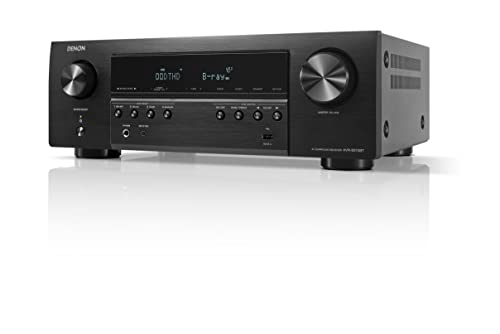
Denon 5.2-Channel 8K Ultra HD AV Receiver
Best for: 8K video and 5.2 channel setups
- Channels
- 5.2
- Power Output
- 70W x 5
- Video Resolution
- 8K Ultra HD
- HDMI Ports
- 4-in / 1-out
- Surround Sound Formats
- DTS HD Master, Dolby TrueHD
- Wireless Connectivity
- Bluetooth
View on Amazon: Denon 5.2-Channel 8K Ultra HD AV Receiver Affiliate link
This Denon 5.2-channel AV receiver supports 8K and 4K video output. It includes Bluetooth connectivity for wireless audio streaming. The unit measures 17.1 inches wide and weighs 20.2 pounds. It is designed for gaming and complete 3D surround sound. You get HDMI inputs for connecting multiple sources. This model suits setups needing basic surround sound with modern video support.
Pros
- 5.2-channel audio configuration
- 8K and 4K Ultra HD video support
- Bluetooth wireless connectivity
- HDMI inputs for source connection
Cons
- Only 5.2 channels compared to 9.2 in the Onkyo TX-NR7100
- Bluetooth only, no Wi-Fi mentioned
- No Amazon Alexa voice control listed in specs
Good fit if
- You need 8K video passthrough
- You want Bluetooth streaming
- You prefer a 5.2 setup
Skip if
- You need more than 5.2 channels
- You require Wi-Fi connectivity
- You want 9.2 channel processing
Verdict: Denon AVR-S570BT 5.2 Channel Receiver offers 8K video and Bluetooth in a compact 5.2 format. It fits buyers who prioritize video resolution over channel count.

Onkyo 9.2-Channel THX Certified AV Receiver
Best for: Large home theaters needing 9.2 channels
- Channels
- 9.2-Channel
- Power Output
- 100 Watts Per Channel
- Wireless Connectivity
- Bluetooth, AirPlay 2
- Color
- Black
- Dimensions
- 14.9 × 17.1 × 6.8 inches
- Weight
- 27.5 pounds
View on Amazon: Onkyo 9.2-Channel THX Certified AV Receiver Affiliate link
The Onkyo TX-NR7100 is a 9.2-channel AV receiver designed for immersive home theater setups. It features THX certification and IMAX Enhanced support for accurate audio reproduction. You get 4K video processing and bi-directional Bluetooth for wireless streaming. The unit integrates with major smart home ecosystems and includes built-in Chromecast and AirPlay 2. It weighs 27.5 pounds and measures 17.1 inches wide. This model suits users who want extensive channel expansion and certified surround sound performance.
Pros
- 9.2-channel configuration for expansive surround sound
- THX Certified with Cinema, Gaming, Music, and Surround EX modes
- IMAX Enhanced mode for sharp 4K HDR images and powerful sound
- Bi-directional Bluetooth for streaming or transmitting to wireless headphones
- Smart features including AirPlay 2, Chromecast, and voice control compatibility
Cons
- Video resolution is limited to 4K rather than 8K
- No 8K Ultra HD video support mentioned in specifications
- Heavier build at 27.5 pounds compared to lighter entry-level models
Good fit if
- You want a 9.2-channel setup for large rooms
- You need THX Certified audio performance
- You require IMAX Enhanced video and audio processing
Skip if
- You require 8K video passthrough
- You prefer a lighter, more compact receiver
- You only need basic stereo or 5.1-channel audio
Verdict: The Onkyo TX-NR7100 9.2-Channel AV Receiver fits users who prioritize THX certification and extensive channel count over 8K video support. It delivers a robust, certified surround experience for dedicated home theater enthusiasts.
Specifications side by side
| Spec | Denon 5.2-Channel 8K Ultra HD AV Receiver | Onkyo 9.2-Channel THX Certified AV Receiver |
|---|---|---|
| Channels | 5.2 | 9.2-Channel |
| Power Output | 70W x 5 | 100 Watts Per Channel |
| Video Resolution | 8K Ultra HD | not stated |
| HDMI Ports | 4-in / 1-out | not stated |
| Surround Sound Formats | DTS HD Master, Dolby TrueHD | not stated |
| Wireless Connectivity | Bluetooth | Bluetooth, AirPlay 2 |
| Connectivity | Bluetooth | not stated |
| Color | Black | Black |
| Use | Gaming | not stated |
| Inputs | HDMI | not stated |
| Dimensions | 20.5 × 17.1 × 9 inches | 14.9 × 17.1 × 6.8 inches |
| Weight | 20.2 pounds | 27.5 pounds |
| Model | AVRS570BT | TXNR7100 |
| Size | not stated | 10.10 |
Frequently asked questions
Which receiver is better for gaming?
The Denon AVR-S570BT is marked for gaming use. It features 8K Ultra HD video resolution. This high resolution supports future displays. The compact 5.2-channel design fits smaller spaces. You get Bluetooth connectivity for wireless audio. This setup prioritizes video clarity over massive channel counts.
Do both brands offer Bluetooth?
Yes, both the Denon and Onkyo models include Bluetooth. The Denon AVR-S570BT lists Bluetooth as a key connectivity feature. The Onkyo TX-NR7100 also supports Bluetooth for wireless streaming. This allows you to connect phones or tablets easily. You can stream music wirelessly without extra cables.
Which unit is lighter?
The Denon AVR-S570BT is lighter at 20.2 pounds. The Onkyo TX-NR7100 weighs 27.5 pounds. The weight difference reflects the internal component density. The Onkyo unit is larger and heavier due to its 9.2-channel architecture. You should check your shelf strength for the heavier Onkyo model.
Can I use these for surround sound?
Both units handle surround sound effectively. The Denon offers a 5.2-channel configuration. This is standard for most living rooms. The Onkyo provides a 9.2-channel setup. This higher count supports advanced object-based audio. It is ideal for dedicated home theater enthusiasts who want immersive sound.
Is the Onkyo receiver THX certified?
Yes, the Onkyo TX-NR7100 is THX certified. This certification ensures strict performance standards. The Denon AVR-S570BT does not list THX certification. If you prioritize certified audio accuracy, the Onkyo is the choice. The Denon focuses on 8K video instead of audio certification.
What video resolution do they support?
The Denon AVR-S570BT supports 8K Ultra HD. This is the highest resolution available in this comparison. The Onkyo TX-NR7100 does not highlight 8K support. It focuses on channel count and THX certification. You should choose the Denon if you have an 8K display.
Which receiver has more HDMI inputs?
Both receivers list HDMI as their primary input type. The specific number of ports is not detailed in the specs. However, both support HDMI connectivity for video sources. You will need to check the rear panel for exact port counts. Both units are designed to connect modern AV sources.