Dual Electronics Dual CS429 Fully Automatic Belt‑Drive Turntable vs Dual Electronics Dual CS518 Manual Belt‑Drive Turntable: Spec Comparison
As an Amazon Associate we earn from qualifying purchases. Links on this page are affiliate links.
The dual electronics dual cs429 fully automatic belt drive turntable vs the Dual CS518 manual model offers a clear choice in operation. Both units share the same Ortofon 2M Red cartridge, three speeds, and belt-drive motors. They also use MDF plinths and elastomer isolation for vibration control. The main difference is how you control playback. One handles the process automatically. The other requires manual cueing and lift. You choose based on your preferred level of control.
Key differences
| Aspect | Dual CS429 Automatic Belt-Drive Turntable | Dual Manual Belt-Drive Turntable |
|---|---|---|
| Operation | Fully automatic | Manual |
| Tonearm | Adjustable, universal headshell | Twin-gimbal, adjustable |
| Platter Material | Layered MDF chassis | MDF plinth |
| Dimensions | 17.3 x 14.6 x 5.91 inches | 13.1 x 7.68 x 4.04 inches |
| Weight | 17.4 pounds | 13 pounds |
Which one should you choose?
Choose Dual CS429 Automatic Belt-Drive Turntable if
- You prefer the convenience of automatic start and stop functions.
- You want a larger, heavier chassis for added stability.
- You value a universal headshell for easy cartridge swaps.
Choose Dual Manual Belt-Drive Turntable if
- You want full manual control over cueing and playback.
- You prefer a smaller footprint that fits tighter spaces.
- You enjoy the tactile experience of a twin-gimbal tonearm.
Verdict: The CS429 suits listeners who want set-and-forget convenience with a robust, heavy build. The CS518 is better for those who want a compact unit and prefer manual control over the entire process. Both deliver identical sound quality through the shared Ortofon 2M Red cartridge.
Dual CS429 vs CS518 Specs
Operation style
The Dual CS429 is a fully automatic turntable, meaning it handles the entire playback cycle for you. It starts the record, plays it, and returns the tonearm without your intervention. The Dual CS518 is a manual model, requiring you to start the platter and cue the tonearm yourself. If you prefer a hands-off approach that reduces physical handling of the vinyl, the CS429 offers convenience. The CS518 suits those who want direct control over every step of the process. This distinction defines the user experience significantly.
Tonearm design
Both turntables include adjustable tonearms to help you set up the Ortofon 2M Red cartridge correctly. The CS429 features a universal headshell, which simplifies swapping cartridges in the future by allowing you to detach the entire cartridge assembly easily. The CS518 uses a twin-gimbal tonearm design, engineered for ultra-low friction movement. This specific bearing type aims to reduce distortion and ensure accurate tracking across the record groove. While both are upgrade-friendly, the CS429’s universal headshell may offer more flexibility for quick changes.
Physical dimensions
Size matters if you have limited shelf space. The CS429 measures 17.3 inches in length, 14.6 inches in width, and 5.91 inches in height. It weighs 17.4 pounds. The CS518 is notably more compact, measuring 13.1 inches in length, 7.68 inches in width, and 4.04 inches in height. It weighs 13 pounds. The CS518 takes up significantly less surface area and is lighter to move. If your setup has tight constraints, the smaller footprint of the CS518 is a practical advantage over the larger CS429.
Build materials
Both units prioritize vibration control through similar material choices. The CS429 uses a layered MDF chassis to dampen resonances from the motor and external sources. The CS518 features an MDF plinth for the same purpose. Both models incorporate elastomer isolation; the CS429 lists general elastomer isolation features, while the CS518 specifies elastomer isolation feet. These materials help keep the sound clean by preventing unwanted vibrations from coloring the audio. Neither model offers a significant material advantage over the other in terms of core construction quality.
Speed options
You need to match the turntable speed to your vinyl records. Both the Dual CS429 and the Dual CS518 support three speeds: 33 RPM, 45 RPM, and 78 RPM. This covers standard LPs, singles, and older 78 RPM records. Since both models provide the same range of rotational speeds, there is no difference in versatility regarding record compatibility. You can play any standard vinyl format on either device without limitation. This shared specification ensures both units are equally capable for diverse collections.
Which Dual Turntable Fits You
Listeners needing an integrated phono preamplifier
You get a built-in switchable phono stage, allowing direct connection to line-level auxiliary inputs on powered monitors or modern amplifiers. The 17.4-pound layered MDF chassis adds vibration damping, while the universal headshell permits straightforward cartridge changes. It also supports 33, 45, and 78 RPM playback alongside factory Ortofon 2M Red alignment.
Listeners prioritizing low-friction tonearm tracking precision
You receive an adjustable twin-gimbal tonearm engineered with precision bearings to reduce friction during record tracking. This manual turntable includes elastomer isolation feet beneath an MDF plinth to handle mechanical resonance. It plays 33, 45, and 78 RPM records, offering full manual cueing control for systems equipped with an outboard or integrated phono stage.
Listeners managing restricted audio console space
You save space with a compact profile measuring 7.68 inches wide, 4.04 inches high, and 13.1 inches long. At 13 pounds, it fits smaller shelves while providing a solid MDF plinth and elastomer isolation feet. You retain three playback speeds, Ortofon 2M Red playback, and adjustable tonearm architecture in a reduced footprint.
The products compared
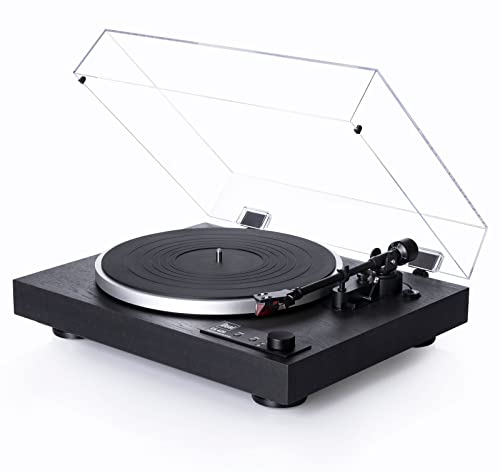
Dual CS429 Automatic Belt-Drive Turntable
Best for: listeners seeking fully automatic operation
- Drive Type
- Belt-drive
- Operation
- Fully automatic
- Speeds
- 33/45/78 RPM
- Preamp
- Switchable phono stage
- Platter Material
- Layered MDF chassis
- Cartridge
- Ortofon 2M Red
View on Amazon: Dual CS429 Automatic Belt-Drive Turntable Affiliate link
The Dual CS429 is a fully automatic belt-drive turntable with a layered MDF chassis and elastomer isolation. It includes a switchable phono stage and an Ortofon 2M Red cartridge. The adjustable tonearm and universal headshell allow for future upgrades. This model supports 33, 45, and 78 RPM speeds. It suits listeners who want automated operation and clear vinyl playback without manual intervention.
Pros
- Fully automatic operation for effortless use
- Includes Ortofon 2M Red cartridge
- Switchable phono stage for flexible connectivity
- Layered MDF chassis with elastomer isolation
Cons
- Heavier build at 17.4 pounds
- Larger footprint than compact alternatives
- No visible speed selector switch on chassis
Good fit if
- You prefer fully automatic operation
- You want a switchable phono stage
- You value resonance control features
Skip if
- You need manual tonearm control
- You require a lighter portable unit
- You prefer a smaller footprint
Verdict: Dual CS429 Fully Automatic Turntable fits users who want automated playback and a switchable phono stage. It suits those who value resonance control and do not mind a heavier build.

Dual Manual Belt-Drive Turntable
Best for: Manual control and upgradeable setups
- Drive Type
- Belt-drive
- Operation
- Manual
- Speeds
- 33, 45, 78 RPM
- Platter Material
- MDF plinth
- Cartridge
- Ortofon 2M Red
- Tonearm
- Twin-gimbal, adjustable
View on Amazon: Dual Manual Belt-Drive Turntable Affiliate link
The Dual CS518 is a manual belt-drive turntable designed for users who prefer direct control over playback. It features a twin-gimbal tonearm with precision-tuned bearings for low friction. The unit includes an Ortofon 2M Red cartridge and supports 33, 45, and 78 RPM speeds. An MDF plinth with elastomer isolation feet helps minimize vibrations. This model suits listeners who want a stable, upgrade-friendly platform for vinyl.
Pros
- Manual operation for full control over cueing and playback
- Twin-gimbal tonearm with adjustable features and precision bearings
- Includes Ortofon 2M Red cartridge for accurate tracking
- Supports 33, 45, and 78 RPM speeds
- MDF plinth with elastomer isolation feet reduces resonance
Cons
- Manual operation requires you to lift the tonearm and start playback
- No automatic stop or return mechanism visible in specifications
- Heavier build at 13 pounds compared to lighter entry-level models
Good fit if
- You want full manual control over record playback
- You plan to upgrade the cartridge or tonearm in the future
- You value a stable MDF base for reduced vibration
Skip if
- You prefer fully automatic start and stop functions
- You need a lightweight, portable turntable for travel
- You want a simpler, set-and-forget playback experience
Verdict: The Dual CS518 Manual Belt-Drive Turntable fits listeners who want direct control over their vinyl sessions. Its manual operation and upgrade-friendly design make it a solid choice for those who enjoy the process of playing records.
Specifications side by side
| Spec | Dual CS429 Automatic Belt-Drive Turntable | Dual Manual Belt-Drive Turntable |
|---|---|---|
| Drive Type | Belt-drive | Belt-drive |
| Operation | Fully automatic | Manual |
| Speeds | 33/45/78 RPM | 33, 45, 78 RPM |
| Preamp | Switchable phono stage | not stated |
| Platter Material | Layered MDF chassis | MDF plinth |
| Cartridge | Ortofon 2M Red | Ortofon 2M Red |
| Tonearm | Adjustable, universal headshell | Twin-gimbal, adjustable |
| Features | Elastomer isolation | Elastomer isolation feet |
| Speed | 3-Speed | 3-Speed |
| Color | Black | Black |
| Dimensions | 17.3 × 14.6 × 5.91 inches | 13.1 × 7.68 × 4.04 inches |
| Weight | 17.4 pounds | 13 pounds |
| Model | CS429BK | CS518BK |
Frequently asked questions
Does the Dual CS429 include a built-in phono preamp?
Yes, the Dual CS429 features a switchable phono stage. This allows you to connect the turntable directly to powered speakers or a receiver with a line-level input. You can toggle this setting based on your audio setup, providing flexibility without needing an external preamp unit for basic connections.
How do the dimensions of the CS429 compare to the CS518?
The CS429 is significantly larger than the CS518. It measures 17.3 inches in length, 14.6 inches in width, and 5.91 inches in height. In contrast, the CS518 is more compact, measuring 13.1 inches long, 7.68 inches wide, and 4.04 inches high. The CS429 requires more surface space.
Is the tonearm on the CS518 upgradeable?
The Dual CS518 is designed with an upgrade-friendly structure for listeners who want direct control. While the data confirms its manual operation and solid build, it does not list specific technical details about tonearm modularity or replacement parts. You should consult the manufacturer for precise upgrade pathways.
What cartridge comes with these Dual turntables?
Both the Dual CS429 and the Dual CS518 ship with the Ortofon 2M Red cartridge. This shared component ensures consistent sound quality across both models. You get the same stylus and generator technology regardless of whether you choose the fully automatic CS429 or the manual CS518.
Which turntable is heavier?
The Dual CS429 is the heavier unit, weighing 17.4 pounds. The Dual CS518 weighs 13 pounds. The CS429’s additional mass may contribute to better resonance control, as noted in its verdict. The lighter CS518 is easier to move but may require careful placement to minimize vibrations.
Can I play records at 45 RPM on these models?
Yes, both turntables support three speeds. This typically includes 33 1/3 RPM for albums, 45 RPM for singles, and 78 RPM for older records. You can select the appropriate speed for your vinyl using the controls on the front panel of either the CS429 or the CS518.
Does the CS429 automatically stop when the record ends?
Yes, the Dual CS429 is fully automatic. It handles the entire playback cycle, including returning the tonearm to its rest after the record finishes. You do not need to manually lift the arm. This automation simplifies the listening process, making it ideal for users who prefer convenience.