Fluance vs Sony: Turntables Compared by Specs
As an Amazon Associate we earn from qualifying purchases. Links on this page are affiliate links.
When you compare a fluance vs sony turntable, you are looking at two distinct approaches to vinyl playback. Both units deliver analog sound through belt or direct drive mechanisms and include built-in preamps for easy connection to standard audio gear. The main difference lies in operation and connectivity. Fluance offers a traditional manual setup with a premium cartridge. Sony provides fully automatic operation and wireless Bluetooth streaming, appealing to users who prioritize convenience and modern integration.
Key differences
| Aspect | Fluance Walnut Belt-Drive Turntable | Sony Fully Automatic Bluetooth Turntable |
|---|---|---|
| Operation | Manual | Fully Automatic |
| Connectivity | Wired only | Bluetooth and Wired |
| Cartridge | Audio Technica AT95E | Moving Magnet |
| Tonearm | Balanced aluminum S-Type | Pivot bearing aluminum |
| Weight | 14.1 pounds | 7.72 pounds |
Which one should you choose?
Choose Fluance Walnut Belt-Drive Turntable if
- You prefer a traditional manual listening experience with a high-performance Audio Technica cartridge.
- You want a heavier, wood-plinth design that offers superior vibration isolation.
- You prioritize wired signal clarity and do not need wireless streaming capabilities.
Choose Sony Fully Automatic Bluetooth Turntable if
- You want one-touch automatic start, stop, and tonearm return for effortless operation.
- You need to connect wirelessly to Bluetooth speakers, headphones, or soundbars.
- You prefer a lighter, more compact unit that is easier to move or store.
Verdict: Choose the Fluance RT81 if you value manual control, a heavier build for isolation, and a specific high-fidelity cartridge. Select the Sony PS-LX3BT if you prioritize fully automatic operation and the convenience of Bluetooth connectivity for modern audio setups.
Fluance Vs Sony Turntable Specs
Drive type
Both turntables use belt drive mechanisms to spin the platter. The Fluance RT81 Elite uses a belt drive to isolate the motor from the platter, reducing vibration. The Sony PS-LX3BT also employs a belt drive system for stable rotation. This shared mechanical approach means you get similar isolation from motor noise on both units. Neither model uses a direct drive motor. You get consistent speed and reduced rumble from the belt system on both the Fluance and Sony options.
Operation
The Sony PS-LX3BT offers fully automatic operation with one-step auto start, stop, and return. You do not need to manually lift the tonearm or engage the motor. The Fluance RT81 Elite is a manual turntable. You must manually place the needle and return the tonearm after playback. If you prefer simplicity and hands-free operation, the Sony is the better choice. If you enjoy the ritual of manual handling and precise control, the Fluance suits you better. This is a clear functional difference between the two.
Connectivity
The Sony PS-LX3BT includes built-in Bluetooth connectivity. You can wirelessly connect to compatible speakers, headphones, or soundbars. It also supports wired connections via built-in audio cables. The Fluance RT81 Elite relies on gold-plated RCA line outputs and a ground terminal. It requires a wired connection to your audio system. The Sony offers more flexibility for wireless setups. The Fluance provides a traditional wired analog connection. Your choice depends on whether you want wireless convenience or a dedicated wired link.
Cartridge
The Fluance RT81 Elite comes with an Audio Technica AT95E cartridge. It features a diamond elliptical tipped stylus for precise tracking. The Sony PS-LX3BT uses a moving magnet cartridge with a stylus pressure of 3.5±0.5g. The Fluance specifies a premium branded cartridge known for high-definition audio. The Sony uses a generic moving magnet design. The Fluance cartridge offers a specific model name and elliptical tip for detail. The Sony cartridge focuses on warm analog audio with smooth tracking.
Build and weight
The Fluance RT81 Elite is built on a high mass MDF wood plinth with a walnut finish. It weighs 14.1 pounds. The Sony PS-LX3BT is a lighter unit weighing 7.72 pounds. The Fluance uses solid engineered wood and isolation feet for vibration control. The Sony uses a silver aluminum die cast platter for stable rotation. The Fluance offers a heavier, more substantial cabinet. The Sony is more compact and portable. You get a premium wood finish on the Fluance and a sleek black design on the Sony.
Which Turntable Fits Your Setup
You want simple one-touch operation
The Sony PS-LX3BT handles start, stop, and return automatically. You do not need to lift the tonearm or engage the belt manually. This fully automatic function reduces physical interaction with the mechanism. It suits listeners who prioritize convenience and ease of use over manual adjustments during playback.
You prefer wired audio fidelity
The Fluance RT81 Elite includes a built-in Texas Instruments preamp and gold-plated RCA outputs. You connect directly to your receiver using standard cables. This setup ensures a pure analog signal path without digital conversion. The aluminum S-Type tonearm and Audio Technica cartridge provide precise tracking for detailed sound.
You want wireless speaker compatibility
The Sony PS-LX3BT features built-in Bluetooth connectivity. You can stream audio wirelessly to compatible speakers, headphones, or soundbars. This removes the need for long audio cables between components. The switchable phono EQ also allows wired connections to receivers without a separate preamp, offering flexible setup options for modern gear.
The products compared
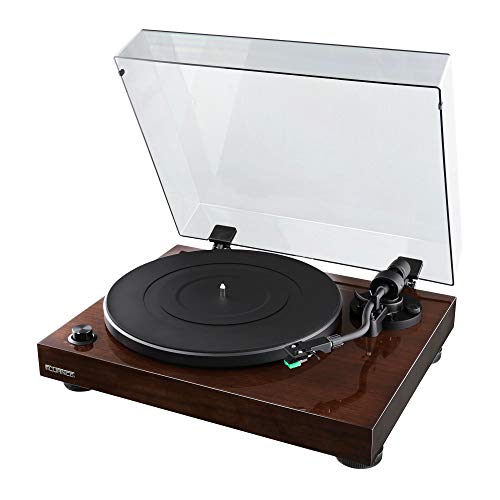
Fluance Walnut Belt-Drive Turntable
Best for: Pure analog listening with precise tracking
- Drive Type
- Belt drive
- Preamp
- Built-in Texas Instruments preamp
- Platter Material
- Aluminum platter, rubber platter mat
- Cartridge
- Audio Technica AT95E
- Tonearm
- Balanced aluminum S-Type tonearm
- Color
- Walnut
View on Amazon: Fluance Walnut Belt-Drive Turntable Affiliate link
The Fluance RT81 is a belt drive turntable in a walnut MDF cabinet. It features an aluminum platter with a rubber mat and an Audio Technica AT95E cartridge with a diamond elliptical stylus. The balanced aluminum S-Type tonearm ensures precise tracking. A built-in Texas Instruments preamp and ground terminal provide signal clarity. This setup suits listeners who prefer pure analog playback without wireless complexity.
Pros
- Audio Technica AT95E cartridge with diamond elliptical stylus
- Balanced aluminum S-Type tonearm for precise tracking
- Built-in Texas Instruments preamp with ground terminal
- Aluminum platter with rubber mat for vibration isolation
Cons
- No wireless Bluetooth connectivity for streaming
- Belt drive requires periodic maintenance
- Fixed internal preamp limits output flexibility
Good fit if
- You want a pure analog listening experience
- You prefer wired RCA connections
- You value precise stylus tracking accuracy
Skip if
- You need wireless Bluetooth streaming
- You want a direct drive motor
- You prefer a lighter portable design
Verdict: The Fluance RT81 Walnut Belt Drive Turntable fits buyers who want high fidelity analog playback with a reliable belt drive system and precise tracking. It is ideal for those who prioritize sound accuracy over wireless convenience.

Sony Fully Automatic Bluetooth Turntable
Best for: Wireless connectivity and automatic playback
- Drive Type
- Belt-drive
- Operation
- Fully automatic
- Speeds
- 33 1/3, 45 rpm
- Connectivity
- Bluetooth (aptX adaptive), audio cable
- Preamp
- Built-in switchable phono EQ
- Platter Material
- Die-cast aluminum
View on Amazon: Sony Fully Automatic Bluetooth Turntable Affiliate link
The Sony PS-LX3BT is a fully automatic turntable with Bluetooth connectivity. It features a moving magnet cartridge and a switchable built-in phono preamp. The silver aluminum die-cast platter and pivot bearing aluminum tonearm provide stable rotation and accurate tracking. You can connect to wireless speakers or use wired inputs. This unit suits listeners who want simple operation and modern wireless options.
Pros
- Fully automatic operation with auto start, stop, and return
- Built-in switchable phono EQ for flexible connectivity
- Bluetooth wireless connection to speakers and headphones
- Silver aluminum die-cast platter for stable rotation
Cons
- Pivot bearing tonearm rather than a linear track design
- Fixed stylus pressure of 3.5±0.5g with no adjustment
- No remote control listed in specifications
Good fit if
- You want to connect wirelessly to Bluetooth speakers
- You prefer fully automatic record playback
- You need a built-in phono preamp for direct connection
Skip if
- You require a linear tracking tonearm for precise tracking
- You need to adjust stylus force manually
- You want a turntable with a remote control
Verdict: Sony PS-LX3BT Wireless Turntable is a practical choice for those who value wireless connectivity and automatic operation. It fits listeners who want to connect directly to Bluetooth speakers without extra components.
Specifications side by side
| Spec | Fluance Walnut Belt-Drive Turntable | Sony Fully Automatic Bluetooth Turntable |
|---|---|---|
| Drive Type | Belt drive | Belt-drive |
| Operation | not stated | Fully automatic |
| Speeds | not stated | 33 1/3, 45 rpm |
| Connectivity | not stated | Bluetooth (aptX adaptive), audio cable |
| Preamp | Built-in Texas Instruments preamp | Built-in switchable phono EQ |
| Platter Material | Aluminum platter, rubber platter mat | Die-cast aluminum |
| Cartridge | Audio Technica AT95E | Moving magnet |
| Tonearm | Balanced aluminum S-Type tonearm | Pivot bearing aluminum |
| Features | not stated | Auto start, stop and return |
| Color | Walnut | Black |
| Inputs | not stated | Phono |
| Dimensions | 13.7 × 16.5 × 5.5 inches | 16.9 × 14.5 × 4.72 inches |
| Weight | 14.1 pounds | 7.72 pounds |
| Model | RT81 | PSLX3BT |
Frequently asked questions
Which turntable is better for pure analog listening?
The Fluance RT81 is the better choice for pure analog listening. It is designed for buyers who prioritize sound accuracy over wireless convenience. This model features a belt drive system that helps isolate the motor from the platter. The result is precise tracking and reduced vibration during playback.
Can I connect the Sony turntable to Bluetooth speakers?
Yes, the Sony PS-LX3BT supports direct Bluetooth connectivity. This feature allows you to pair the turntable with compatible wireless speakers without needing extra components. It is a practical solution for listeners who want to simplify their setup and enjoy music without tangled wires or additional amplifiers.
Which turntable is fully automatic?
The Sony PS-LX3BT is a fully automatic turntable. It handles the start, stop, and return of the tonearm automatically. You do not need to lift the tonearm or engage the belt manually. This reduces physical interaction with the mechanism, making it ideal for users who prefer one-touch operation.
What are the dimensions of the Fluance turntable?
The Fluance RT81 measures 16.5 inches in width, 13.7 inches in length, and 5.5 inches in height. It weighs 14.1 pounds. These dimensions provide a substantial footprint for stable playback. The walnut finish adds a classic aesthetic to your audio setup.
How heavy is the Sony turntable?
The Sony PS-LX3BT weighs 7.72 pounds. It measures 14.5 inches in width, 16.9 inches in length, and 4.72 inches in height. Its lighter weight and black finish make it a compact option for smaller spaces or setups where portability might be a consideration.
Do both turntables use belt drive mechanisms?
Yes, both turntables utilize belt drive mechanisms to spin the platter. The Fluance RT81 uses this system to isolate the motor and reduce vibration. The Sony PS-LX3BT also employs a belt drive for stable rotation. Both designs aim to deliver consistent speed and clear sound quality.