Pyle Home Stereo Receiver Bluetooth vs Pyle Wireless Bluetooth Streaming Amplifier: Spec Comparison
As an Amazon Associate we earn from qualifying purchases. Links on this page are affiliate links.
This comparison covers the pyle home stereo receiver bluetooth vs wireless bluetooth streaming options from Pyle. Both units offer Bluetooth 5.0 connectivity for wireless audio streaming. They also share USB and SD card inputs for local media playback. The main difference lies in their power output and input variety. The first model provides 800W peak power and dual microphone inputs. The second offers HDMI connectivity and a dedicated headphone jack.
Key differences
| Aspect | Pyle 4-Channel 800W Receiver with USB | Pyle 300W HDMI Multi-Channel Amplifier |
|---|---|---|
| Power Output | 800 W peak | 300 W peak |
| Digital Inputs | not listed | Optical, Coaxial, HDMI |
| Microphone Inputs | Dual 1/4'' | Dual 1/4'' |
| Headphone Output | not listed | Yes, with independent volume |
| Dimensions | 13.8 x 9.8 x 3.5 inches | 10.2 x 9.8 x 2.8 inches |
| Weight | 10.9 pounds | 8.16 pounds |
Which one should you choose?
Choose Pyle 4-Channel 800W Receiver with USB if
- You need higher peak power for larger speaker setups
- You frequently host karaoke events requiring dual mic inputs
- You prefer a wider chassis for easier front-panel access
Choose Pyle 300W HDMI Multi-Channel Amplifier if
- You want to connect multiple video sources via HDMI
- You need a dedicated headphone output for private listening
- You require optical or coaxial digital audio inputs
Verdict: The 800W receiver suits users prioritizing raw power and karaoke utility. The 300W amplifier is better for home theater setups needing HDMI and digital inputs. Choose based on whether you value speaker output or video integration.
Receiver vs Amplifier Spec Showdown
Power output
The Pyle 4-Channel 800W Receiver with USB delivers 800 watts of peak power. This high output is designed for dynamic sound in larger spaces. In contrast, the Pyle 300W HDMI Multi-Channel Amplifier provides 300 watts of peak power. While both units offer sufficient energy for home audio, the first model boasts significantly higher raw power potential. You should choose the 800W unit if you need maximum volume headroom for multiple speakers or larger rooms. The 300W model is adequate for standard home theater setups but offers less raw power capacity.
Digital inputs
Connectivity options differ notably between the two devices. The Pyle 300W HDMI Multi-Channel Amplifier includes dual HDMI inputs and one output, supporting 4K/3D video passthrough. It also features optical and coaxial digital inputs for high-resolution audio decoding. The Pyle 4-Channel 800W Receiver with USB lacks these specific digital video and optical connections. It relies on analog inputs like RCA and AUX, along with USB and SD cards. If you plan to connect a modern TV or gaming console via HDMI, the 300W model is the only choice that supports this integration directly.
Physical dimensions
Size and footprint matter for shelf placement. The Pyle 4-Channel 800W Receiver with USB measures 13.8 inches in length, 9.8 inches in width, and 3.5 inches in height. The Pyle 300W HDMI Multi-Channel Amplifier is more compact, measuring 10.2 inches in length, 9.8 inches in width, and 2.8 inches in height. Both share the same width, but the 300W unit is shorter in depth and height. You will find the 300W model easier to fit into tight entertainment centers or smaller shelves due to its reduced overall volume and lower profile design.
Weight
Build weight often correlates with chassis stability. The Pyle 4-Channel 800W Receiver with USB weighs 10.9 pounds. The Pyle 300W HDMI Multi-Channel Amplifier weighs 8.16 pounds. The heavier receiver may feel more substantial on a surface, potentially reducing vibration sensitivity. However, the lighter amplifier is easier to move or install. For most users, this weight difference is negligible during setup. If you prioritize a solid, heavy-duty feel, the 800W model has the advantage. If you prefer a lighter unit that is easier to handle, the 300W model is preferable.
Specialized outputs
Unique output features define specific use cases. The Pyle 300W HDMI Multi-Channel Amplifier includes a dedicated headphone jack with independent volume control on the front panel. This allows for private listening without affecting speaker output. The Pyle 4-Channel 800W Receiver with USB does not list a headphone output in its specifications. It focuses on speaker outputs and microphone inputs. If you frequently listen to music privately without disturbing others, the headphone capability of the 300W model is a distinct practical advantage over the receiver.
Which Pyle Receiver Fits Your Setup
Hosts who need karaoke and high volume
You need the 800W peak power for large spaces and dual 1/4-inch mic inputs for live vocals. This unit supports Bluetooth 5.0 for wireless streaming and includes USB and SD card slots for MP3 playback. The front panel LED display lets you adjust settings easily. It is the better choice for events requiring loud, clear audio and microphone integration.
Home theater users with digital sources
You require HDMI inputs and output for connecting modern TVs and consoles. This amplifier features 24-bit optical and coaxial digital decoding for high-fidelity audio. It also includes a dedicated headphone jack with independent volume control for private listening. The compact metal chassis fits neatly into entertainment units while supporting Bluetooth streaming and SD card playback.
Users wanting a compact and lightweight unit
You prefer a smaller footprint and lighter weight for easy placement. This model measures 10.2 x 9.8 x 2.8 inches and weighs only 8.16 pounds. It offers versatile inputs including HDMI, optical, and coaxial digital connections alongside standard analog options. The solid metal chassis ensures efficient heat dissipation. It is ideal for tight spaces without sacrificing digital connectivity.
The products compared

Pyle 4-Channel 800W Receiver with USB
Best for: karaoke setups and mixed-media stereo playback
- Power Output
- 800 W peak
- Audio Inputs
- Dual 1/4" Mic, AUX, RCA, 3.5mm, USB, SD
- Audio Outputs
- RCA
- Wireless Connectivity
- Bluetooth 5.0
- Color
- Black
- Use
- Karaoke
View on Amazon: Pyle 4-Channel 800W Receiver with USB Affiliate link
This 4-channel stereo receiver delivers up to 800 watts of peak power. You get wireless streaming via Bluetooth 5.0 alongside wired playback from RCA, 3.5mm, USB, and SD card inputs. Dual quarter-inch microphone jacks include dedicated controls for hosting or karaoke. It suits you if you need multi-source playback and microphone connectivity in a single ten-pound unit.
Pros
- 800 watts peak output across 4 channels
- Bluetooth 5.0 streaming with 30-foot range
- Dual 1/4-inch mic jacks with independent adjustments
- Built-in FM radio, USB, and SD card playback
Cons
- Audio output is limited to analog RCA
- No optical or HDMI inputs for digital components
- Bulky 10.9-pound chassis measuring 13.8 inches deep
Good fit if
- You need dual microphone jacks with dedicated level controls for karaoke.
- You want to connect legacy analog gear, USB storage, and SD cards to one device.
- You need an 800-watt peak 4-channel system.
Skip if
- You need HDMI or optical connections for digital sources.
- You want a compact receiver that weighs under 10 pounds.
Verdict: Pyle 4-Channel 800W Bluetooth Stereo Receiver provides high peak wattage and dual microphone inputs for users running karaoke sessions and mixed-media audio sources.
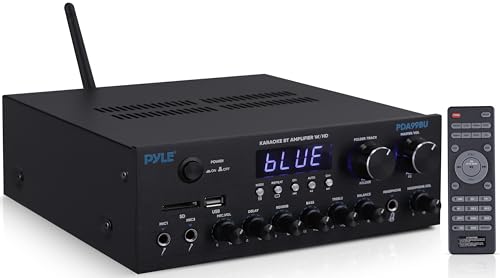
Pyle 300W HDMI Multi-Channel Amplifier
Best for: karaoke setups with dual HDMI sources
- Power Output
- 300W peak
- Amplifier Class
- Class A/B
- Audio Inputs
- HDMI, optical, coaxial, AUX, RCA, mic
- Audio Outputs
- HDMI, headphone jack
- Wireless Connectivity
- Bluetooth
- Color
- Black
View on Amazon: Pyle 300W HDMI Multi-Channel Amplifier Affiliate link
This Pyle amplifier delivers 300W of peak power using Class A/B technology. It features dual HDMI inputs with 4K support and 24-bit optical or coaxial digital decoding. You can stream via Bluetooth or play files from USB and SD cards. The unit includes independent headphone volume control and dual mic inputs for karaoke. Its compact metal chassis measures 10.2 by 9.8 by 2.8 inches.
Pros
- 300W peak power output
- Dual HDMI inputs with 4K/3D support
- 24-bit optical and coaxial digital decoding
- Independent headphone volume control
- Dual mic inputs with echo
Cons
- Lower power output than the 800W competitor
- No dedicated remote control listed
- Limited to Bluetooth wireless connectivity
Good fit if
- You need dual HDMI inputs for multiple video sources
- You want to connect microphones for karaoke
- You prefer a compact metal chassis
Skip if
- You require more than 300W of power
- You need Wi-Fi or multi-room audio support
- You want a remote control included
Verdict: Pyle 300W Bluetooth Streaming Amplifier fits users who need dual HDMI inputs and karaoke features. It suits those who prioritize digital audio decoding over raw power.
Specifications side by side
| Spec | Pyle 4-Channel 800W Receiver with USB | Pyle 300W HDMI Multi-Channel Amplifier |
|---|---|---|
| Power Output | 800 W peak | 300W peak |
| Amplifier Class | not stated | Class A/B |
| Audio Inputs | Dual 1/4" Mic, AUX, RCA, 3.5mm, USB, SD | HDMI, optical, coaxial, AUX, RCA, mic |
| Audio Outputs | RCA | HDMI, headphone jack |
| Wireless Connectivity | Bluetooth 5.0 | Bluetooth |
| Connectivity | Bluetooth, USB | Bluetooth, USB, Coaxial |
| Color | Black | Black |
| Use | Karaoke | not stated |
| Inputs | RCA | Optical |
| Media Playback | FM Radio, MP3, SD Card | SD Card |
| Outputs | not stated | Headphone |
| Channels | 4-Channel | not stated |
| Dimensions | 13.8 × 9.8 × 3.5 inches | 10.2 × 9.8 × 2.8 inches |
| Weight | 10.9 pounds | 8.16 pounds |
| Size | 10.04 x 13.78 x 3.54 Inch | One Size |
| Model | PDA77BU | PDA99BU |
Frequently asked questions
Which Pyle receiver is better for karaoke?
The Pyle 4-Channel 800W Receiver with USB is the better choice for karaoke. It delivers 800 watts of peak power, which supports high-volume performance in larger rooms. This model includes specific inputs for microphones, allowing you to connect vocal sources directly. The dual mic inputs make it ideal for live singing sessions or parties where you need clear audio reinforcement alongside your music.
Does the Pyle 300W amplifier support HDMI?
Yes, the Pyle 300W HDMI Multi-Channel Amplifier supports HDMI connectivity. It features dual HDMI inputs, allowing you to connect multiple digital sources like gaming consoles or streaming devices. This setup lets you switch between video sources while using the amplifier for audio output. It is designed for users who need to decode digital audio signals from modern home theater equipment.
What is the difference in power between the two models?
The primary difference is the peak power output. The Pyle 4-Channel 800W Receiver provides 800 watts, offering stronger output for larger spaces or demanding speakers. The Pyle 300W HDMI Multi-Channel Amplifier provides 300 watts of peak power. This lower output is sufficient for smaller rooms or setups where digital decoding features take priority over raw volume and high-power performance.
Can I use SD cards with both receivers?
Yes, both units support SD card media playback. You can insert an SD card into either the Pyle 800W Receiver or the 300W Amplifier to play MP3 files directly. This feature allows for local media playback without needing a connected smartphone or computer. It provides a simple way to access your music library wirelessly via Bluetooth or through direct digital files.
Which model is lighter and more compact?
The Pyle 300W HDMI Multi-Channel Amplifier is lighter and more compact. It weighs 8.16 pounds and measures 10.2 inches in length. In comparison, the Pyle 800W Receiver weighs 10.9 pounds and is longer at 13.8 inches. If you have limited shelf space or need to move the unit frequently, the smaller 300W model offers a more portable footprint for your audio setup.
Does the Pyle 800W receiver have headphone output?
The provided specifications for the Pyle 800W Receiver do not list a headphone output. It focuses on RCA inputs and Bluetooth connectivity for main speaker output. However, the competing Pyle 300W Amplifier explicitly includes a headphone output. If private listening is a priority, you may need to check the 300W model or use external headphones connected to your source device instead.
What connectivity options do both Pyle units share?
Both units share Bluetooth 5.0 connectivity for wireless streaming from your devices. They also both include USB inputs for flash drives and SD card slots for local media playback. These shared features allow you to stream music wirelessly or play files directly from removable storage. This commonality ensures basic functionality is consistent across both models regardless of their other specific differences.