YAMAHA vs Denon: Receivers Compared by Specs
As an Amazon Associate we earn from qualifying purchases. Links on this page are affiliate links.
This YAMAHA vs denon receiver comparison focuses on two 5.2-channel AV receivers with 8K support. Both units deliver solid home theater performance with Bluetooth connectivity and HDMI inputs. The main difference lies in their physical footprint and specific feature sets. Yamaha offers room correction and multi-point streaming, while Denon emphasizes gaming enhancements and smart assistant integration. You should choose based on your room size and desired audio processing tools.
Key differences
| Aspect | Yamaha 5.2-Channel 8K AV Receiver | Denon 5.2-Channel 8K Ultra HD AV Receiver |
|---|---|---|
| Power Output | 70W | not listed |
| Surround Sound Formats | Dolby Atmos, DTS Virtual:X | Complete 3D Surround Sound |
| Smart Features | Bluetooth Multipoint | Amazon Alexa |
| Room Correction | Included setup microphone | not listed |
| Weight | 16.8 pounds | 20.2 pounds |
| Height | 6.13 inches | 9 inches |
Which one should you choose?
Choose Yamaha 5.2-Channel 8K AV Receiver if
- You want automatic room correction with an included microphone.
- You need to switch between two Bluetooth devices instantly.
- You prefer a lighter unit that fits in smaller spaces.
Choose Denon 5.2-Channel 8K Ultra HD AV Receiver if
- You want built-in Amazon Alexa voice control.
- You prioritize a receiver marketed for enhanced gaming features.
- You do not require detailed power output specifications.
Verdict: The Yamaha RX300A is the better choice for users who value precise audio tuning through room correction and flexible wireless streaming. The Denon AVR-S570BT suits those who prefer integrated smart assistant support and a heavier build for gaming setups.
Yamaha vs Denon Receiver Specs
Channel Configuration
Both the Yamaha RX300A and the Denon AVR-S570BT feature a 5.2-channel architecture. This means each unit provides five channels for surround sound and one dedicated channel for a subwoofer. This configuration is standard for entry-level home theater setups. It allows you to connect five main speakers and a bass module. The Yamaha model supports flexible layouts, including 3.1.2 configurations with up-firing or in-ceiling speakers for height effects. The Denon model also supports 5.2 channels but does not list specific height channel configurations in its published data. For basic surround sound, both receivers offer the same foundational channel count.
Power Output
The Yamaha RX300A specifies a power output of 70 watts. This figure indicates the amplifier's capability to drive connected speakers. Higher wattage generally supports louder playback and better control over speaker cones. The Denon AVR-S570BT does not list a specific wattage rating in its provided specifications. Without this number, it is difficult to compare the raw amplification strength of the two units directly. You must rely on the Yamaha's stated power for volume expectations. The Denon's performance will depend on other factors not detailed here. If high volume is a priority, the Yamaha's explicit rating offers a clearer benchmark for your system.
Video Resolution
Both receivers support 8K video resolution. The Yamaha RX300A specifically lists 8K/60 and 4K/120 support. This means it can handle 8K content at 60 frames per second and 4K content at up to 120 frames per second. This is beneficial for high-refresh-rate gaming and smooth motion. The Denon AVR-S570BT lists 8K Ultra HD and 4K Ultra HD support but does not specify the frame rates for these resolutions. The Yamaha's detailed frame rate specifications provide more clarity for future-proofing your video connections. If you plan to use high-frame-rate 4K sources, the Yamaha's explicit 4K/120 capability is a documented advantage.
Surround Sound Formats
The Yamaha RX300A supports Dolby Atmos and DTS Virtual:X. Dolby Atmos provides object-based 3D audio for immersive sound. DTS Virtual:X offers virtualized height effects without needing physical height speakers. The Denon AVR-S570BT lists complete 3D surround sound support but does not specify the exact codecs in its key specs. Both units likely support standard formats, but the Yamaha's explicit mention of DTS Virtual:X adds versatility for rooms where installing ceiling speakers is difficult. The Yamaha provides more specific information on its audio processing capabilities. This clarity helps you understand how the receiver will handle different content types.
Physical Dimensions
The Yamaha RX300A measures 17.1 inches in width, 6.13 inches in height, and 12.5 inches in length. The Denon AVR-S570BT measures 17.1 inches in width, 9 inches in height, and 20.5 inches in length. Both units share the same width, but the Denon is significantly taller and deeper. The Yamaha is more compact in height and length, which may fit better in smaller AV racks. The Denon's larger footprint might require more shelf space. If space is a constraint, the Yamaha's smaller dimensions offer a practical advantage. The Denon's larger size does not necessarily indicate better performance, just a different physical design.
Which receiver fits your needs
You want room correction and precise setup
The Yamaha RX300A includes a setup microphone for room correction. This feature measures your room’s acoustics and automatically optimizes sound performance. It also offers Bluetooth Multipoint, allowing you to pair two source devices and switch between them instantly. This convenience supports effortless streaming of music and podcasts without manual re-pairing.
You prefer a compact physical footprint
The Denon AVR-S570BT measures 17.1 inches wide, 9 inches high, and 20.5 inches deep. While the Yamaha is similar in width, the Denon’s depth is slightly greater but its height is more compact. If your entertainment center has limited vertical space, this smaller height profile may fit your setup better while still providing 8K video support.
You need advanced gaming video features
The Yamaha RX300A supports 4K/120 and 8K/60 video resolutions. It also includes advanced HDMI switching and next-gen gaming features like Auto Low Latency Mode and Variable Refresh Rate. These specs ensure smoother visuals and reduced input lag for gaming. The Denon lists 8K support but does not specify 120Hz frame rates or these specific gaming modes.
The products compared

Yamaha 5.2-Channel 8K AV Receiver
Best for: Home theater setups needing 8K and simple setup
- Channels
- 5.2-channel
- Power Output
- 70W
- Video Resolution
- 4K/120, 8K/60
- Surround Sound Formats
- Dolby Atmos, DTS Virtual:X
- Wireless Connectivity
- Bluetooth Multipoint
- Color
- Black
View on Amazon: Yamaha 5.2-Channel 8K AV Receiver Affiliate link
The Yamaha RX300A is a 5.2-channel home theater receiver delivering 70W of power per channel. It supports 8K/60 and 4K/120 video with HDMI eARC. You get Dolby Atmos and DTS Virtual:X for immersive sound. Bluetooth Multipoint lets you pair two devices. An included microphone handles room correction. It suits you if you want straightforward setup and solid performance.
Pros
- 70W power output per channel
- 8K/60 and 4K/120 video support
- Dolby Atmos and DTS Virtual:X
- Bluetooth Multipoint connectivity
- Includes setup microphone for room correction
Cons
- Limited to 5.2 channels
- No mention of Wi-Fi or app control
- No mention of a physical remote
Good fit if
- You want 8K video support
- You need Bluetooth Multipoint
- You prefer simple setup with included mic
Skip if
- You need more than 5.2 channels
- You require Wi-Fi streaming
- You want app-based control
Verdict: The Yamaha RX300A 5.2-Channel AV Receiver fits you if you prioritize 8K video and easy setup with room correction. It delivers solid 70W power and Dolby Atmos for home theater use.
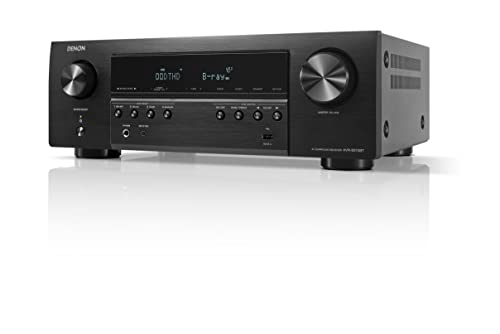
Denon 5.2-Channel 8K Ultra HD AV Receiver
Best for: 8K video and Bluetooth audio streaming
- Channels
- 5.2
- Power Output
- 70W x 5
- Video Resolution
- 8K Ultra HD
- HDMI Ports
- 4-in / 1-out
- Surround Sound Formats
- DTS HD Master, Dolby TrueHD
- Wireless Connectivity
- Bluetooth
View on Amazon: Denon 5.2-Channel 8K Ultra HD AV Receiver Affiliate link
The Denon AVR-S570BT is a 5.2-channel AV receiver designed for home theater and gaming. It supports 8K and 4K Ultra HD video pass-through for future-proof connectivity. You get Bluetooth wireless streaming for audio playback and integrated Amazon Alexa voice control. The unit weighs 20.2 pounds and measures 17.1 inches wide. It is a solid choice for users who want 3D surround sound without complex wired setups.
Pros
- 5.2-channel audio configuration for surround sound
- 8K and 4K Ultra HD video support
- Bluetooth connectivity for wireless streaming
- Amazon Alexa integration for voice control
Cons
- Only 5.2 channels, fewer than 7.1 or 9.1 options
- No HDMI eARC mentioned for high-bandwidth audio return
- Bluetooth only, no Wi-Fi or AirPlay support listed
Good fit if
- You want 8K video support for future TVs
- You prefer Bluetooth streaming over Wi-Fi
- You need basic 5.2-channel surround sound
Skip if
- You require more than 5.2 audio channels
- You need Wi-Fi or multi-room audio
- You want HDMI eARC for lossless audio
Verdict: The Denon AVR-S570BT 5.2 Channel Receiver fits gamers and casual listeners who need 8K video support and Bluetooth streaming without the bulk of a larger system.
Specifications side by side
| Spec | Yamaha 5.2-Channel 8K AV Receiver | Denon 5.2-Channel 8K Ultra HD AV Receiver |
|---|---|---|
| Channels | 5.2-channel | 5.2 |
| Power Output | 70W | 70W x 5 |
| Video Resolution | 4K/120, 8K/60 | 8K Ultra HD |
| HDMI Ports | not stated | 4-in / 1-out |
| Surround Sound Formats | Dolby Atmos, DTS Virtual:X | DTS HD Master, Dolby TrueHD |
| Wireless Connectivity | Bluetooth Multipoint | Bluetooth |
| Connectivity | Bluetooth | Bluetooth |
| Color | Black | Black |
| Use | Home Theater | Gaming |
| Inputs | HDMI | HDMI |
| Dimensions | 12.5 × 17.1 × 6.13 inches | 20.5 × 17.1 × 9 inches |
| Weight | 16.8 pounds | 20.2 pounds |
| Model | RX300ABL | AVRS570BT |
Frequently asked questions
Does the Yamaha RX300A support 8K video output?
Yes, the Yamaha RX300A supports 8K video resolution. This allows you to connect high-resolution displays and enjoy sharp, detailed visuals for movies and gaming. The receiver processes video signals to maintain clarity while handling audio simultaneously.
Can I stream music from my phone to the Denon AVR-S570BT?
Yes, the Denon AVR-S570BT includes Bluetooth connectivity. You can pair your smartphone or tablet to stream music wirelessly to the receiver. This feature is convenient for casual listening without needing physical cables or additional adapters.
What is the weight difference between these two receivers?
The Yamaha RX300A weighs 16.8 pounds, while the Denon AVR-S570BT weighs 20.2 pounds. The Denon unit is heavier, which may affect shelf stability. Consider your mounting options or stand strength when choosing between these two models.
Do both receivers have HDMI inputs for multiple devices?
Yes, both the Yamaha RX300A and the Denon AVR-S570BT feature HDMI inputs. You can connect multiple sources like gaming consoles, Blu-ray players, or streaming sticks. This ensures you can switch between devices easily using a single TV connection.
Is the Yamaha RX300A suitable for home theater setups?
Yes, the Yamaha RX300A is designed for home theater use. It provides 5.2 channels of audio power and supports Dolby Atmos for immersive sound. The included room correction helps optimize audio performance for your specific listening environment.
How wide are the Yamaha and Denon receivers?
Both the Yamaha RX300A and the Denon AVR-S570BT are 17.1 inches wide. This standard width fits most entertainment centers and shelves. You do not need to worry about width constraints when planning your home theater layout.
Which receiver is better for gaming due to video support?
Both receivers support 8K video, making them suitable for modern gaming. The Denon AVR-S570BT is explicitly noted for gaming use. It handles high-resolution video signals well while delivering 5.2-channel surround sound for an immersive gaming experience.